
 Blog
Blog Social

Revolutionizing Recruitment: Experience Is the New Differentiator

 Two schools may offer strong academics, caring teachers, competitive tuition, attractive facilities, and meaningful opportunities for students. On paper, they may look remarkably similar. Yet a family can leave one campus feeling uncertain and leave another already imagining their child as part of the community.
What created the difference?
Often, it was not a program, statistic, or facility. It was the experience.
In the previous article in this series, I wrote that relationships are the new marketing because relationships create the trust families need to move forward. Those relationships, however, are not built through promises alone. They are formed through the experiences families have with your school.
That leads to the second rule in my Revolutionizing Recruitment framework:
Experience Is the New Differentiator
Experience has always mattered. That is not new. What has changed is how important the experience has become as families compare schools that often make many of the same claims.
Nearly every school talks about academic quality, caring teachers, individual attention, strong community, meaningful values, and preparation for the future. Those messages may all be true, but they do not always help a family distinguish one school from another.
Parents need more than information about what your school offers. They need to experience what makes your school different.
Features help families compare schools. Experience helps them choose.
The Experience Begins Before the Family Arrives
When my sons were younger, one of the highlights of our trips to Walt Disney World was the drive from our home in St. Petersburg to Orlando. Depending on the traffic, that trip could take less than two hours, although anyone who has driven on Interstate 4 knows that it could also take much longer.
As we approached Walt Disney World, we would eventually see something that always created excitement in the car: the Mickey-shaped electrical tower.
 The Mickey Pylon stands along the I-4 highway and carries power lines toward the Disney property. From a practical standpoint, it serves a simple utility function. But Disney did not allow it to remain merely functional. Someone intentionally designed it in the unmistakable shape of Mickey Mouse.
For my sons, seeing that tower meant we were almost there. The anticipation increased. The conversation changed. The Disney experience had already begun, even though we had not yet reached the entrance.
The same principle applies to school recruitment. The prospective family experience does not begin when parents walk into the admissions office. It begins much earlier.
It may begin with a recommendation from another parent, an online review, a Google search, an AI-generated comparison, or the first visit to your website. It continues with the inquiry form, the automated response, the first phone call, the directions to campus, and the instructions about where to park and enter.
By the time a family arrives for a tour, they have already had several experiences with your school. Each one has shaped their expectations.
The campus visit does not create the first impression. It confirms or changes the impression that has already begun to form.
“We Were Expecting You”
During my visits to schools across the country, I have experienced some exceptional examples of intentional hospitality.
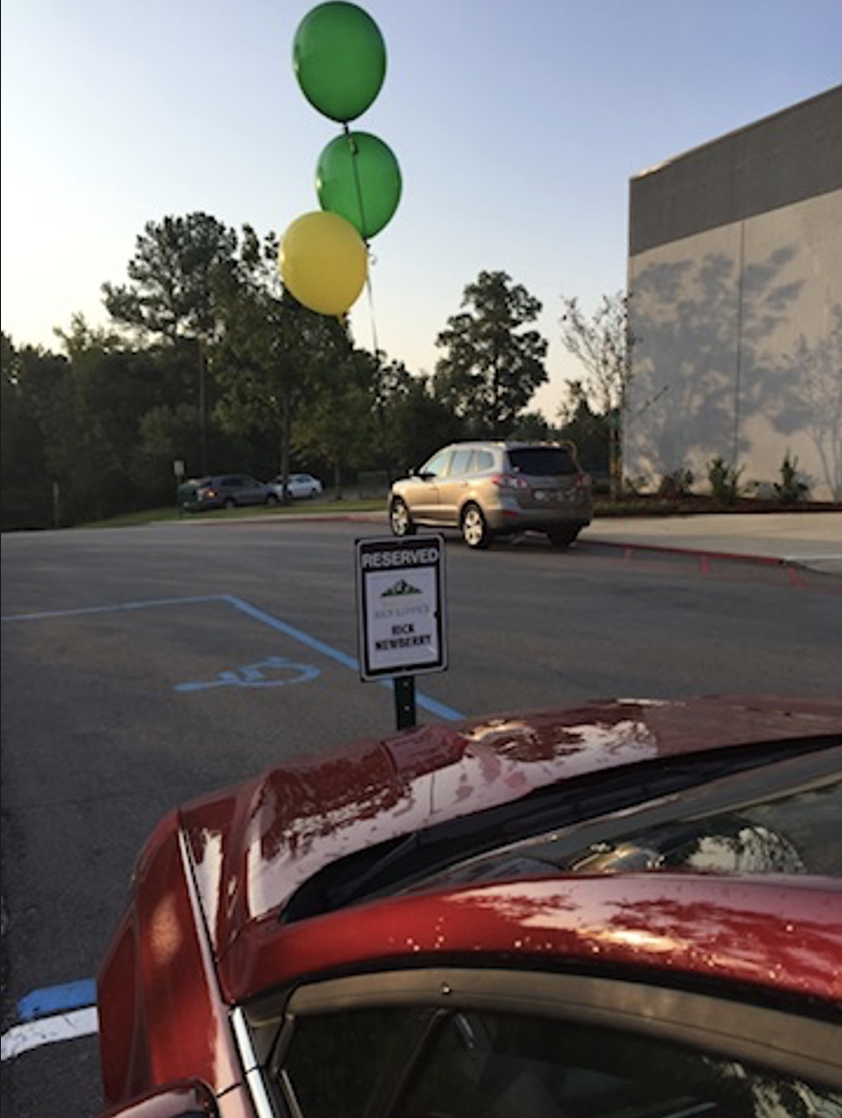 One that has always stood out occurred at Ben Lippen School in Columbia, South Carolina. When I arrived on campus, I found a reserved parking space with my name on it, along with balloons welcoming me to the school. It was obvious where I should park, where I should go, and that someone had prepared for my arrival.
Kelly Adams, who led that effort, understands how thoughtful details can shape an experience. The message was not simply, “Here is a parking space.” The deeper message was, “We knew you were coming. We prepared for you. You matter to us.”
I later experienced a similar welcome at King’s Ridge Christian School in Alpharetta, Georgia. By the way, Dr. Tony Fajardo, King’s Ridge Head of School was formerly at Ben Lippen. In addition to a personalized sign, the school displayed my name on the Jumbotron at its football field. It was unexpected, personal, and memorable.
These examples are not important because every school needs balloons, a personalized parking space, or access to a large video board. Copying the tactic without understanding its purpose misses the point.
The strategy is not the sign. The strategy is intentional hospitality. Or, in the word of Will Guider, “Unreasonable Hospitality.”
A family should arrive on campus and immediately sense that the school was expecting them. That message can be communicated through a reserved parking place, clear signage, a personalized welcome, a student greeter, or simply a warm person standing at the entrance ready to greet the family by name.
The cost may be small, but the emotional impact can be significant.
Help Parents Picture Their Child at Your School
Parents do not visit a school simply to inspect a campus. They are trying to imagine a future.
As they walk through classrooms, observe students, meet teachers, and listen to the admissions director, they are asking questions that may never be spoken aloud. Will they see my child? Will my child thrive here? Will my child find friends? Does this community feel like us? Can I trust these people to understand and care for my child?
A successful campus visit helps parents move beyond evaluating the school and begin picturing their child within it. It should be a total experience.
That shift matters.
When a visiting student is welcomed by name, the child begins to imagine belonging. When a teacher asks about the student’s interests, the parent begins to see personal attention. When the head of school takes a few minutes to offer a sincere welcome, the family sees evidence that leadership values relationships.
The visit becomes persuasive when a parent stops seeing your school merely as a place and begins seeing their child within it.
This is why the student should never become an afterthought during a campus visit. Too often, adults talk to one another while the child quietly follows along. The parent may receive information, but the student never develops a connection.
The child should be welcomed, included, and engaged. A student ambassador can be especially valuable because another student can answer questions adults may never hear and help the prospective student imagine what daily life would feel like.
Parents are watching those interactions carefully. They are looking for evidence that their child will be known, valued, and able to flourish.
Families Remember Moments
Most campus tours include a considerable amount of information. Admissions directors explain academic programs, class sizes, extracurricular activities, school history, tuition, financial aid, and the next steps in the process.
That information is important, but families are unlikely to remember all of it. What they are more likely to remember are the moments that created an emotional connection.
They may remember the student who smiled and introduced herself, the teacher who paused during class to ask their child a question, the head of school who came out of an office to welcome them, or the classroom where their child suddenly became animated and interested.
Those moments become emotional anchors in the family’s decision.
In my keynote, I emphasized two parts of the visit that deserve special attention: the emotional high point and the way the visit ends. Families may forget the exact route they took through campus, but they will remember the moment when they felt the strongest connection. They will also remember whether they left with warmth, clarity, and confidence about what would happen next.
That is why schools should think carefully about the beginning, middle, and end of every visit.
The opening should reduce anxiety and communicate welcome. The middle should create meaningful connection and help the family envision belonging. The ending should reinforce the relationship, answer remaining questions, and provide a clear next step.
A rushed ending can weaken an otherwise strong visit. Families should not leave wondering whether anyone will follow up or what they are expected to do next. Clarity is part of the experience.
A Tour Is Not the Same as an Experience
Most schools have a tour route. They know which buildings to show, which classrooms to enter, and which programs to explain.
But a tour route is not an experience strategy.
A tour can be completed efficiently and still feel impersonal. The admissions director can cover every important fact and still fail to build a connection. The family may leave well informed but emotionally unmoved.
Managing a campus visit focuses on logistics. Designing the experience focuses on meaning.
A managed visit asks whether the appointment was confirmed, the materials were prepared, the campus was covered, and the admissions process was explained.
A designed experience asks a different set of questions. How did the family feel before they arrived? Was it easy to know where to park and enter? Who welcomed the parent and child? Did someone listen before beginning the presentation? What moment helped the family feel most connected? Did the child have a meaningful interaction? Did the family meet people who represent the heart of the school? How did the visit end, and what happened afterward?
Both logistics and experience matter. But completing the required steps does not guarantee that the family felt welcomed, understood, or inspired.
A managed visit completes the process. A designed visit creates meaning.
Small Touches Communicate Something Larger
Schools sometimes assume that creating a remarkable experience requires a large budget. In reality, many of the most memorable touches are simple.
A reserved parking space communicates that the school prepared for the family. A welcome sign communicates that the school knows their name. A student ambassador signals that the child belongs in the conversation. A brief welcome from the head of school communicates that the family is important. A thoughtful follow-up shows that the school listened and has not forgotten them.
None of these touches is powerful simply because of the tactic itself. Their value comes from what they communicate together.
They tell the family that the school is attentive, thoughtful, organized, and relational. They turn broad marketing promises into something the parent can actually feel.
Remarkable experiences are not always expensive. They are usually thoughtful.
Experience Is Everyone’s Responsibility
Just as relationships cannot be assigned only to the admissions office, neither can experience.
The family’s impression is shaped by everyone they encounter. The front office, faculty, coaches, students, business office, school leaders, and even the physical environment all contribute to the experience.
A beautiful welcome from admissions can be undermined by a cold greeting elsewhere. A thoughtful tour can lose its impact if teachers appear disengaged or staff members ignore visitors in the hallway. Parents notice those inconsistencies.
The admissions team may design the visit, but the culture of the school delivers it.
That makes this a leadership issue. School leaders must help every employee understand that prospective families are not interruptions to the work of the school. They are considering joining the community and entrusting the school with their child.
A smile, a greeting, a moment of attention, or a thoughtful conversation may appear small to the employee involved. To the family, it may become the moment they remember most.
Questions for School Leaders
As you evaluate your recruitment experience, consider the process through the eyes of a prospective family.
When does the experience with your school actually begin? Is the journey from inquiry to campus easy and welcoming? What happens during the first five minutes of a visit? Does the child feel as important as the parent? Where is the strongest emotional moment in the experience? Are teachers, students, and school leaders intentionally included? Does the family leave knowing exactly what happens next?
Most importantly, what does the entire experience communicate about your school?
You may intend to communicate warmth, community, academic strength, and personal care. But intention alone is not enough. Families judge the school based on what they actually experience.
Give Families a Reason to Choose
Parents will certainly consider your academics, tuition, programs, outcomes, and facilities. These factors matter, and schools should communicate them clearly.
But when parents sit around the kitchen table and make their final decision, they will also remember how your school made them feel. They will remember whether they felt welcomed or processed, whether their child was noticed or overlooked, and whether the experience helped them imagine becoming part of the community.
The strongest recruitment experiences do more than provide information. They create confidence and help families move from asking, “Is this a good school?” to believing, “This could be our school.”
Features may place your school on the list. Experience gives families a reason to choose it.
