
 Blog
Blog Social

AI and the Future of School Enrollment Marketing

 5 Shifts That Will Redefine How Schools Attract and Enroll Families
Most schools are not prepared for what’s coming next in marketing.
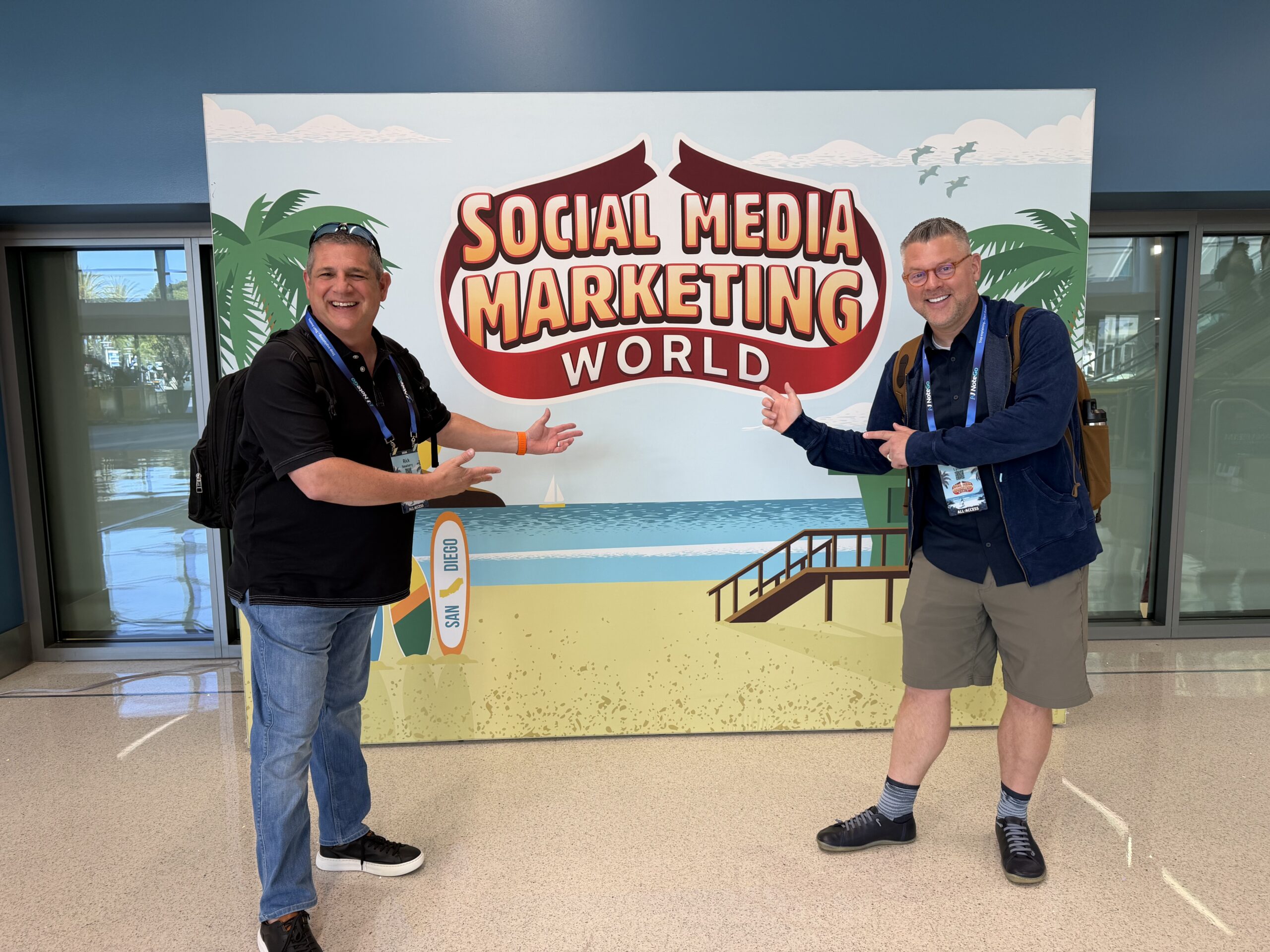
I just returned from Social Media Marketing World, where I spent most of my time in the AI Business World sessions.
I was in sessions with thousands of marketing leaders from around the world, learning from some of the leading voices in AI and marketing today. There was no shortage of ideas, tools, and strategies being shared. Andy Lynch, president of Tassel, attended the conference with me, as we are preparing for our AI Summit later this year.
 But what stood out to me wasn’t any one tactic.
It was something more foundational.
Every speaker, regardless of topic, was working from a clear framework. And when you step back and connect the dots, those frameworks were pointing to the same larger shift taking place in marketing.
It’s changing quickly. Faster than most schools are adapting.
Here are five shifts I believe every school leader, admissions director, and marketing professional needs to understand right now.
1. From Creating Content to Building Systems
For years, schools have been told they need to create more content. More posts, more emails, more videos.
But the consistent message throughout these sessions was that volume alone is no longer the advantage. In fact, it often creates more noise without better results.
What matters now is the system and strategy behind the content.
The schools that will grow enrollment are not the ones asking, “What should we post this week?” They are thinking more strategically about how content is created, reused, and distributed over time.
For example, one blog post should not live in one place.
It should show up in your email communication, your social channels, and even within your admissions process. That doesn’t happen by accident.
It requires an intentional system.
AI can provide your engine to generate content strategically to reach your community.
2. From Traffic to Influence
This is one of the more important shifts, and it has real implications for how schools think about marketing success.
For a long time, the focus has been on driving traffic to a website. But families are no longer moving through a clean, linear funnel. They are consuming content across multiple platforms, gathering information from AI tools, social media sites, review and directory listings, and forming opinions long before they ever land on your site.
In many cases, your website is no longer the first impression.
It’s just one of many.
That means the conversation needs to shift from traffic to influence.
As Rand Fishkin put it, “If you want to win, you have to focus on influence.”
Schools don’t just need more traffic.
They need more influence.
This influence should focus on a robust online strategy on all of your channels.
3. From One-Size-Fits-All Messaging to Personalization
Another theme that came up repeatedly was personalization. And not in the surface-level sense of adding a first name to an email.
True personalization comes from understanding who someone is, what they care about, and what is driving their decision-making process.
For schools, this is where there is often a disconnect.
Many are already collecting useful information through inquiries, conversations, and even surveys. But that insight rarely translates into more tailored communication.
Families are not all the same.
They are at different stages. They have different concerns. They are looking for different outcomes. They are each on their own journey.
When messaging doesn’t reflect that, it becomes easy to ignore.
AI can help you develop personalized messages to reach your parents.
4. From Promoting Your School to Building Trust
Most school marketing is still built around promoting the school: its programs, its offerings, and its strengths.
There is certainly a place for that. But what came through clearly at this conference is that helpful content consistently outperforms promotional content.
One of the more helpful insights I heard during the conference from Jonathan Mast was this: “Your audience doesn’t hate AI content. They hate unhelpful content.”
That’s an important distinction.
Because families are not just looking for information.
They are looking for confidence.
They want to feel assured that they are making the right decision for their child. That confidence is built over time through consistent, relevant communication.
The schools that stand out are not simply promoting themselves.
They are guiding families.
Used correctly, AI can help you develop content and messaging that connects with and guides families in discovering your school.
5. From Manual Execution to AI-Powered Systems
AI was obviously a major focus throughout the conference, but the conversation has moved beyond tools.
The more meaningful shift is how AI is being used to support and scale marketing efforts. It is becoming a partner in research, content development, and execution.
But this is where schools need to be careful.
AI does not fix unclear messaging.
It does not replace strategy.
It amplifies what is already there.
It becomes a partner to help you increase your effectiveness.
Schools with clarity will move faster. Schools without it will simply create more content without better results.
So what does this mean for your school?
When you step back, these shifts are all pointing in the same direction.
Enrollment marketing is becoming less about individual tactics and more about how everything works together. It is about building systems that create trust, communicate more personally, and position your school effectively over time.
Most schools are not there yet with AI.
That’s the opportunity.
A Final Thought
What struck me most is that the gap between schools is likely to widen.
Some will continue doing what they have always done and will find it increasingly difficult to gain traction. Others will take a more intentional approach, build the right systems, and begin to see stronger, more consistent results.
As Michael Stelzner shared during the conference, “The marketers who leverage this won’t just survive what’s coming. They’ll thrive.”
That same reality is coming to schools.
The difference will not come down to effort.
It will come down to how you implment your AI strategy.
If you are trying to make sense of how these changes apply to your school, I will be walking through these ideas in a practical way in my upcoming AI Catalyst Training Program, beginning May 28.
And later this year, we will go deeper at the AI Summit in November in Orlando, focusing on how these shifts are shaping the future of enrollment and marketing in schools.
If these opportunities resonate with you, take the name step to gain a compentitive advantage for your school by investing in your AI training.
Because this is not a future conversation.
It’s already here.
